7 Tips to Choose Womens Clothing for Every Body Type?

Time:2026-10-16 Author:Ethan
0%

Choosing clothes for your body should feel practical, personal, and freeing. Yet many style guides still treat body shapes like strict categories. Real people are more complex. Bodies change with age, movement, health, and daily routines. A useful guide must respect those differences.

When considering how to choose women's clothing for different body types, begin with observation, not judgment. Notice where fabric pulls, where waistbands sit, and how hemlines move while walking. Measure your shoulders, bust, waist, and hips if helpful. Do not worship the tape measure. Fit matters more than a label. As celebrity stylist and author Susan Moses says, “Fit is the foundation of personal style.” Her point is simple. A well-fitted cotton shirt can look more polished than an expensive garment in the wrong size.

This introduction explores seven practical tips for dressing varied body proportions. It considers silhouette, fabric weight, necklines, sleeve shapes, rise, color placement, and thoughtful tailoring. A soft knit may skim the torso, while structured cotton can create clearer lines. A high-rise trouser may feel supportive, but not for everyone. That matters. Comfort is evidence, too. Try clothes in natural light. Sit down. Raise your arms. Check the side view, not only the mirror front. Some advice here may need adjustment, because no chart can predict your preferences perfectly. Clothing should serve your body, not correct it. Confidence helps, but comfort comes first.
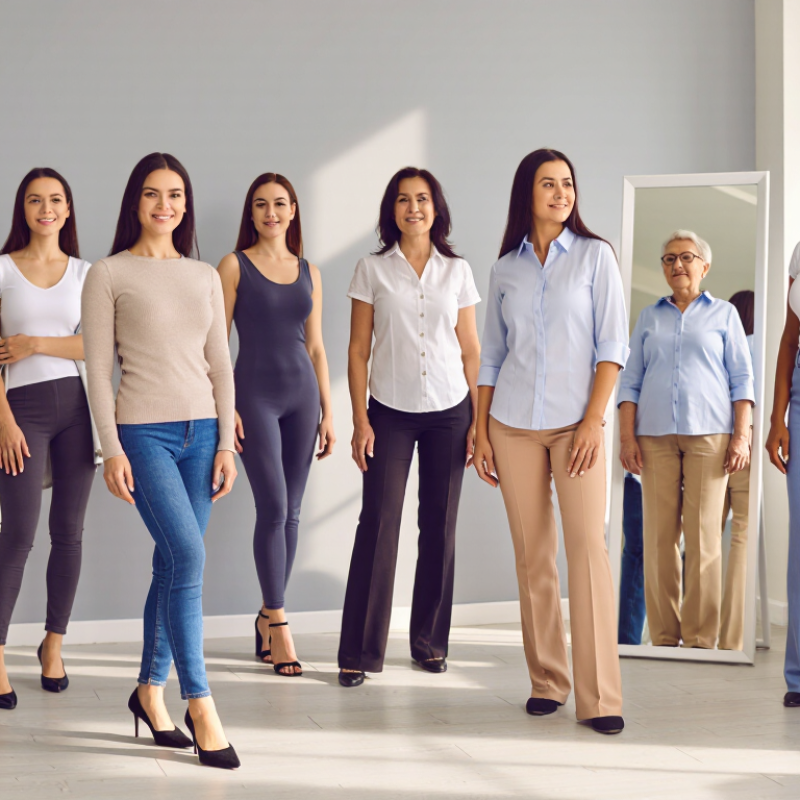
7 Tips to Choose Womens Clothing for Every Body Type?

Identifying Your Body Proportions and Clothing Goals

Choosing women’s clothing becomes easier when you understand your proportions, not just your body type. Start with three measurements: shoulders or bust, natural waist, and fullest hip area. Compare them gently, without forcing the tape tight. Your torso length and leg length also affect how clothes sit. Stand naturally. Comfort matters.

Your clothing goals should guide every choice. You may want movement for commuting, a defined waist for work, or softer layers for everyday wear. A balanced silhouette can help, but balance does not mean hiding your body. Try a structured jacket with relaxed trousers, or a fitted top with a flowing skirt. Notice where fabric pulls, folds, or hangs away from your body. Those details reveal fit better than a size label.

I once followed a rule that wide hips required dark colors and loose clothing. It looked safe, but it felt unlike me. I now test the garment instead. Check shoulder seams, waist placement, hem length, and ease across the seat. Natural fibers may soften after washing, while synthetic fabrics often hold their shape. A qualified tailor can adjust hems and waistbands, but major shoulder changes may be difficult. Some advice will fail for you. That is useful information, not a mistake. Take fitting-room notes, move your arms, sit down, and assess the clothing in real positions.

7 Tips to Choose Women's Clothing for Every Body Type

Identifying your body proportions and clothing goals

The chart uses a normalized style-planning reference, with the waist set to 100. Compare bust, waist, and hip proportions to identify your visual balance, then choose clothing goals such as defining the waist, adding shoulder structure, or creating more lower-body volume. These proportions are practical fitting examples rather than population statistics.

Selecting Suitable Fits, Cuts, and Silhouettes

7 Tips to Choose Women’s Clothing for Every Body Type

Selecting a suitable fit starts with accurate measurements, not a label. Measure bust, natural waist, hips, and inseam while standing naturally. Let your widest point guide sizing. Check shoulder seams, because poor shoulder placement can distort every silhouette.

Choose cuts that support your proportions, such as a shaped waist for a column frame or a clean A-line for fuller hips. High-rise trousers can lengthen the leg visually, while cropped jackets can balance a longer torso.

Fabric changes fit. Woven cotton holds structure, while stretch blends follow movement more gently. Look for enough ease around the bust, seat, and upper arm.

The CDC’s National Health and Nutrition Examination Survey estimated that 40.3% of U.S. adults had obesity in 2021–2023. That figure does not define bodies, but it shows why a single “standard” shape is inadequate.

Fit is personal. It is also technical.

Review garment measurements before buying. Compare them with a favorite item that already fits well. The National Retail Federation and Appriss Retail reported $743 billion in U.S. retail returns during 2023, equal to 14.5% of retail sales.

Fit problems are not the only cause, but better measurement can reduce avoidable mistakes. ASTM International’s body-measurement standards offer useful technical guidance, yet real movement still matters.

Bend, sit, and raise your arms. I sometimes trust a size chart too quickly; that habit needs correction. A beautiful cut fails when the wearer keeps adjusting it.

Using Colors, Patterns, and Details to Create Balance

Choosing women's clothing for every body type becomes easier when color, pattern, and detail work together. In fittings, I examine where the eye travels first. A bright top can draw attention upward, while deeper tones below create visual balance. Soft contrast can also feel elegant. Yet rules are not fixed.

Patterns change the impression of shape and scale. Small prints may look calm on a petite frame, while larger motifs can complement a taller silhouette. Vertical lines often suggest length, but uneven stripes can create unexpected movement. I once chose a bold geometric dress for a client who wanted confidence. The pattern overwhelmed her proportions. We softened it with a plain jacket, and the result felt more natural. That mistake stayed with me.

Details should support comfort, not hide the body. A V neckline may open the upper torso, while a square neckline can add structure. Pockets, pleats, and gathers need careful placement because they add visual weight. A belt can define the waist, but it should not feel tight or forced. Try one change at a time. Take photos from several angles. Mirrors can mislead. Personal comfort matters more than a strict styling rule, and I still revise my advice when a garment looks balanced but feels wrong.

7 Tips to Choose Women's Clothing for Every Body Type? – Using Colors, Patterns, and Details to Create Balance

Practical styling guide based on visual proportion, garment structure, color contrast, and pattern scale.
Tip Styling Objective Best Color Approach Pattern Guidance Useful Details and Cuts Suitable Clothing Examples
1 Identify your visual proportions.
Compare shoulder, waist, and hip widths instead of focusing only on clothing size.
Use lighter or brighter colors where you want more visual emphasis and darker, lower-contrast shades where you want less emphasis. Place larger or higher-contrast patterns on the area you want to highlight. Keep other areas in quieter prints. Choose garments that fit the shoulders, bust, waist, and hips without pulling or excessive looseness. A well-fitted foundation improves balance for every body shape. A balanced outfit may pair a visually detailed top with a simple skirt or trousers, or a structured jacket with a clean, low-contrast base layer.
2 Create definition at the waist.
This can help establish a clear relationship between the upper and lower parts of an outfit.
Use a moderate color contrast between the top and bottom, or choose a single-color outfit with a contrasting belt or trim. Vertical seams, narrow stripes, and subtle tonal patterns can support a streamlined appearance. Try wrap tops, shaped blazers, princess seams, high-rise bottoms, or belts placed at the natural waist. Avoid belts that pinch or create unwanted bunching. A wrap blouse with straight-leg trousers, or a softly tailored dress with a removable belt, offers flexible waist definition.
3 Balance broader shoulders or a fuller upper body.
Direct attention toward the center or lower half of the outfit.
Choose deeper or less contrasting colors on top and brighter, lighter, or more textured colors on the lower half. Use small-scale or low-contrast prints on tops. Vertical lines and open necklines can draw the eye up and down rather than across. V-necks, scoop necks, long open layers, straight sleeves, and simple shoulder lines can reduce visual width. Avoid unnecessary shoulder padding if you want a softer shoulder line. A dark V-neck knit paired with patterned wide-leg trousers creates interest below the waist while keeping the upper half visually clean.
4 Balance fuller hips or a more prominent lower body.
Add controlled interest to the upper body without overwhelming the frame.
Use brighter colors, contrast, or gentle shine on top, with medium or darker shades on the lower half. Choose interesting necklines, restrained horizontal details near the shoulders, or small-to-medium prints on tops. Keep lower-body patterns simple if you prefer less emphasis there. Boat necks, square necks, structured collars, shoulder-skimming sleeves, and A-line skirts can help distribute visual weight. A textured blouse with a defined neckline and a simple A-line midi skirt is an adaptable combination for creating visual balance.
5 Use patterns according to scale and placement.
Pattern size should relate to your frame and the visual effect you want.
Tonal patterns create a quieter effect, while high-contrast color combinations create stronger emphasis. Large motifs are more noticeable; small motifs usually appear more subtle. Vertical patterns can lengthen the visual line, while horizontal patterns can add width in the area where they appear. Check the pattern placement across seams and curves. Avoid prints that become distorted or stretched when the garment is worn. A medium-scale geometric print can work well on a dress, while a fine pinstripe can create a more understated effect on tailored trousers.
6 Choose details that guide the eye.
Necklines, buttons, pockets, hems, and accessories can change perceived proportion.
Use contrasting details to attract attention and matching details to create a quieter, elongated line. Repeated vertical details, such as a row of buttons or a long open cardigan, help create direction. Horizontal pockets and bands add emphasis across their placement. Long necklaces, center-front fastenings, pointed shoes, and open jackets can reinforce a vertical line. Large pockets or heavy embellishment increase emphasis where they are placed. A monochromatic column with an open jacket and a long pendant creates a continuous vertical effect without requiring tight clothing.
7 Prioritize fabric, comfort, and movement.
Good styling should support confidence and practical wear.
Choose colors you enjoy wearing and that coordinate with your existing wardrobe. Color harmony is more useful than rigid rules. Flexible fabrics can soften the effect of bold patterns, while structured fabrics make prints and details appear more defined. Look for breathable fibers, appropriate stretch, smooth seams, and enough ease for sitting and moving. Tailoring can improve balance more effectively than changing body shape. A lined, medium-weight dress with comfortable ease, or a stretch-woven jacket with clean seams, can maintain shape while allowing everyday movement.
Style note: Body-shape categories are optional styling tools, not fixed rules. The most flattering choice is usually the garment that fits comfortably, supports movement, and directs attention in a way that reflects your personal preference.

Choosing Flattering Necklines, Waistlines, and Garment Lengths

7 Tips to Choose Womens Clothing for Every Body Type

Choosing flattering necklines, waistlines, and garment lengths starts with measurements, not size labels. The CDC’s National Center for Health Statistics reported an average waist circumference of 38.7 inches for U.S. women aged 20 and older. That figure shows why “standard” proportions can mislead. Measure your bust, natural waist, hips, and preferred hem point. I have found that a flexible measuring tape reveals more than a crowded fitting room mirror.

Tip 1: Match the neckline to your visual balance. V-necks can lengthen a shorter upper body, while boat necks emphasize the shoulders. A soft scoop neckline often feels less severe than a deep V. Tip 2: Place waistlines carefully. A natural waist can define curves, but an empire seam may suit a shorter torso. Try sitting down before deciding. Small comfort problems become obvious then.

Tip 3: Treat garment length as a proportion tool. A jacket ending near the hipbone can create a clean break, while a midi hem near the slimmest calf area may look intentional. ISO 8559-1 provides standardized guidance for taking body measurements, yet clothing fit remains personal. I once favored a dramatic dropped waist, but it visually shortened my legs. The design looked attractive alone, not on me. Use measurements, movement, and honest reflection together.

Building a Comfortable Wardrobe for Different Occasions

Building a Comfortable Wardrobe for Different Occasions

Choosing womens clothing for every body type starts with comfort, not strict measurements. Body shapes change, and size labels vary between clothing makers. Measure your bust, waist, and hips, then compare them with each garment’s size guide. A flexible fabric can improve movement, while a structured seam can create useful support. Fit matters more than the number on the label.

For work, try breathable trousers, a soft shirt, and a lightweight jacket with room at the shoulders. For casual days, high-rise jeans, an easy knit top, and supportive shoes can handle walking and errands. A wrap dress may suit many figures because its adjustable waist follows natural curves. For formal occasions, choose a dress or suit that lets you sit, lift your arms, and breathe comfortably. Test these movements before removing the tags.

Layering helps one wardrobe serve several occasions. A long cardigan can soften a fitted outfit, while a belt can change its shape without forcing it. Neutral colors make combinations easier, but personal color choices still matter. I often buy attractive pieces that stay unworn because they require too much adjusting. That mistake taught me to check pockets, fasteners, fabric weight, and care instructions. Comfort is not identical for everyone. Some people prefer compression, while others need relaxed cuts and softer waistbands. Clothing should support daily life, even when the “perfect” fit remains imperfect.

FAQS

Which measurements should I take before buying women’s clothing?

Measure your bust, natural waist, hips, and inseam while standing naturally. Keep the tape comfortable, not tight. Your widest area often guides sizing best. Also note your torso and leg length.

How can I choose clothes for my proportions?

Compare shoulder, waist, and hip measurements gently. Try a shaped waist with relaxed trousers. An A-line skirt can provide ease around fuller hips. These are useful ideas, not strict rules.

Why do clothing sizes often feel unreliable?

Size labels vary between clothing makers. Review the garment measurements instead. Compare them with a favorite item that already fits well. I sometimes trust charts too quickly. That needs correction.

What should I check when trying on a garment?

Check shoulder seams, waist placement, hem length, and fabric tension. Raise your arms. Sit down. Bend naturally. Watch for pulling across the bust, seat, or upper arm. A garment may look attractive but still require constant adjustment.

Which fabrics can improve comfort and movement?

Stretch blends usually follow movement more gently. Woven cotton can hold a clearer shape. Natural fibers may soften after washing. Check fabric weight and care instructions before buying.

What clothing works well for commuting or casual days?

Try breathable trousers, a soft shirt, and a lightweight jacket. For casual wear, consider high-rise jeans and an easy knit top. Supportive shoes help during walking and errands. Comfort is the real test.

Can one wardrobe work for different occasions?

Layering makes clothing more flexible. A long cardigan can soften a fitted outfit. A belt can change the silhouette without forcing it. Neutral colors simplify combinations, but personal colors still matter.

What should I do if standard styling advice feels wrong?

Test the garment instead of obeying the rule. Dark colors and loose clothing do not suit everyone. Take fitting-room notes and notice your actual comfort. Some advice will fail for you. That is useful information.

Conclusion

Learning how to choose women's clothing for different body types begins with understanding your natural proportions, personal preferences, and clothing goals. Rather than following rigid rules, focus on creating a balanced and comfortable appearance. Select fits, cuts, and silhouettes that complement your shape while allowing easy movement. Thoughtful use of colors, patterns, textures, and small design details can draw attention to preferred features and create visual harmony.

Necklines, waistlines, and garment lengths also play an important role in achieving a flattering fit. Consider how each element works with your proportions and the occasion. A practical wardrobe should include comfortable, versatile pieces for work, casual activities, social events, and formal settings. By combining confidence, comfort, and intentional styling, you can build outfits that express your personality and help you feel polished and comfortable every day.

Ethan

Ethan

Ethan is a seasoned marketing professional with a deep expertise in our company's innovative product line. With a passion for sharing knowledge and insights, he takes the lead in regularly updating our corporate blog, where he explores industry trends, product features, and effective marketing......