2026 How to Choose Apparel Manufacturers by Certification

Time:2026-09-26 Author:Isabella
0%

Choosing an apparel manufacturer in 2026 takes more than comparing prices and sample-room photos. A certificate can help verify how materials are sourced, how workers are treated, and how chemicals are managed. But a logo on a factory profile proves little by itself. Buyers need to check the issuing body, scope, validity dates, and whether the certificate covers the actual production site and product.

The stakes are substantial. The United Nations Environment Programme estimates that the fashion industry contributes between 2% and 8% of global greenhouse-gas emissions. That range is broad, and certification alone cannot solve the problem. Still, standards such as GOTS, OEKO-TEX STANDARD 100, and SA8000 can provide useful, distinct evidence when their requirements match a buyer’s needs. They are not interchangeable. A fabric safety label does not, for example, demonstrate responsible labor practices.

So, what certifications matter in apparel manufacturing? The answer depends on the product, market, materials, and risks in your supply chain. Textile Exchange’s standards and guidance can help buyers assess fiber sourcing and traceability, while factory audits and direct document checks add necessary context. Certification expert quotes require careful verification; without a reliable, attributable source, it would be misleading to invent one. Treat each certificate as a starting point, not a guarantee. Ask for current documents, confirm the facility name, and check whether subcontractors are included. A missing detail matters. Sometimes, the most useful finding is that a certificate covers less than the sales pitch suggests.
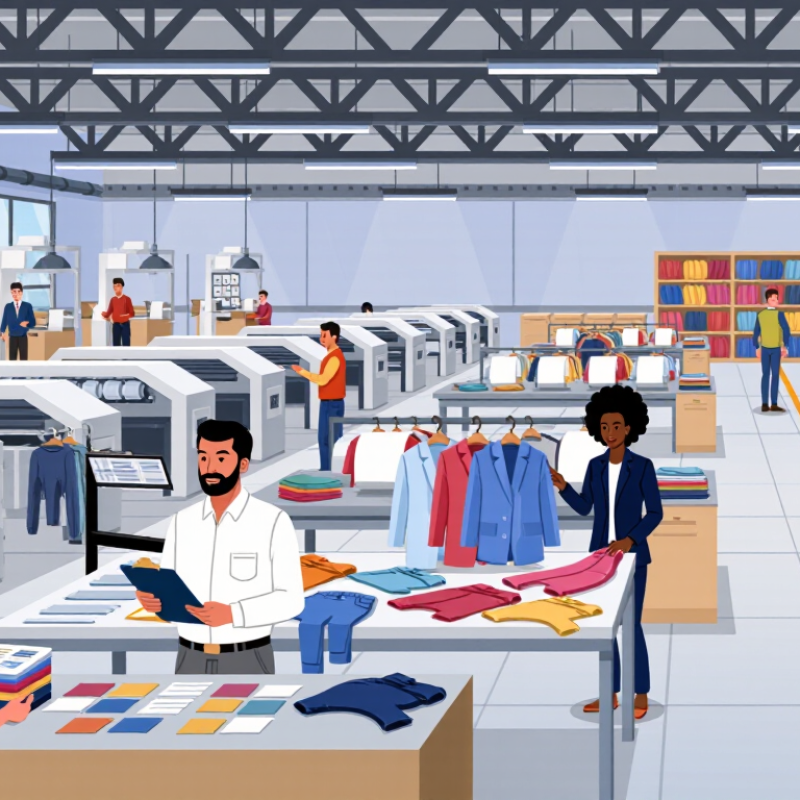
2026 How to Choose Apparel Manufacturers by Certification

Define the Certifications That Match Your Apparel Product

Start with the garment, not a certificate list. A soft cotton baby bodysuit may need verified fiber origin and testing for restricted substances. A recycled polyester shell calls for evidence that recycled content can be traced through the supply chain. Match each requirement to the actual fabric, trims, dyeing, and finishing steps.

Check what a certificate covers. OEKO-TEX Standard 100 focuses on testing textile products for harmful substances; it does not prove that a garment is organic. GOTS applies to certified organic textile processing and sets environmental and social criteria within its scope. For recycled materials, GRS can support recycled-content and chain-of-custody claims. Ask to see the certificate, its expiry date, covered facilities, and product scope. A factory’s certificate may not cover every subcontractor or item it produces.

Keep the claim precise. If only the fabric is certified, do not describe the whole garment as certified. Request transaction records for the order, then compare fiber details against the product specification. It takes time. There is no perfect certificate stack; extra paperwork can add cost without improving the garment. I would still question whether each requested certificate addresses a real product risk or customer requirement.

Verify Manufacturer Credentials and Certification Validity

When choosing an apparel manufacturer, do not stop at a certificate PDF. Check the certificate number in the issuer’s or accreditation body’s online register, then confirm its status and expiry date. The site address matters: a valid certificate for one factory may not cover the workshop sewing your order. Check the scope, too. It should match the actual activity, such as garment processing or quality management, rather than a vague company-wide claim. Small detail, big difference.

The International Organization for Standardization’s ISO Survey 2023 recorded about 1.27 million ISO 9001 certificates worldwide. That scale makes careful verification worthwhile, especially when a supplier sends a scan without a searchable record. Compare the legal entity, facility address, scope, issue date, and certification body across documents. If anything differs, ask for clarification and contact the issuer through independently sourced contact details. I still find a polished PDF reassuring, though it should not be.

Tips: Request the latest certificate and audit summary. Verify the facility and scope in the registry, and confirm the certificate remains active. Save dated screenshots or written confirmation with your supplier file. A certificate is useful evidence, not a guarantee of daily practice; a short factory walkthrough can reveal gaps a document cannot.

2026 How to Choose Apparel Manufacturers by Certification - Verify Manufacturer Credentials and Certification Validity

Certification or Standard What It Covers What to Request from the Manufacturer How to Check Scope and Validity Important Limitation
ISO 9001
Quality management systems
Quality-management processes, including documented procedures, monitoring, corrective action, and continual improvement. A complete certificate showing the certified legal entity, site address, scope, certificate number, certification body, and validity dates. Check the certificate with the issuing certification body and, where available, the IAF CertSearch database. Confirm that the apparel manufacturing activities and production site are covered. Certifies a management system, not the quality of every garment or shipment. An ISO certificate alone is not a product-quality guarantee.
ISO 14001
Environmental management systems
How an organization manages environmental responsibilities and works to improve its environmental performance. A current certificate and its scope, including the relevant facility and activities such as textile processing, dyeing, or garment production, if applicable. Verify the certificate number, issuing body, site, scope, status, and dates with the certification body or IAF CertSearch. Does not by itself certify that products are organic, recycled, chemical-free, or environmentally preferable.
ISO 45001
Occupational health and safety management systems
Processes for managing workplace health and safety risks and improving occupational health and safety performance. A current certificate identifying the exact facility, certified activities, issuing certification body, and certificate status. Confirm the certificate directly with the issuer or through IAF CertSearch. Check that the named site is the factory producing the order. It is a management-system certification, not proof that every legal or workplace requirement is met at all times.
OEKO-TEX® STANDARD 100
Textile product testing
Testing of certified textile articles and components for harmful substances under the standard’s applicable criteria. The certificate or label number, product class, covered articles or components, certificate holder, and current validity information. Use the official OEKO-TEX® Label Check. Match the listed product scope and certificate holder to the goods being sourced; check validity for the order date. Do not assume a certificate for one fabric, component, or product covers every style, color, material, or finished garment.
GOTS
Global Organic Textile Standard
Processing and trading requirements for certified organic textiles, including environmental and social criteria across the supply chain. A current Scope Certificate (SC) for the relevant supplier and processing activities; for a specific shipment, request the applicable Transaction Certificate (TC). Search the supplier and certificate details in the GOTS certified suppliers directory. Check product categories, approved activities, certificate status, and dates. A TC relates to specified goods or a transaction. A supplier’s Scope Certificate does not, by itself, prove that a particular shipment is certified. Check transaction documentation and product scope.
Global Recycled Standard (GRS)
Recycled content and chain of custody
Requirements for recycled material, chain of custody, and specified processing, environmental, and social practices within the standard’s scope. A current Scope Certificate covering the relevant facility, processes, and product categories; request a Transaction Certificate for applicable shipped goods. Verify the supplier and scope through Textile Exchange’s certified company search or the listed certification body. Confirm shipment documents for the specific order. A facility certificate alone does not establish the recycled content of a particular shipment. Check transaction records and the stated material composition.
SA8000
Social accountability management system
Workplace and labor-related requirements, including areas such as child labor, forced labor, health and safety, working hours, and management systems. A current certificate naming the production site, certified activities, certification body, and validity status. Check the issuer and certification body against Social Accountability Accreditation Services resources, including its accreditation information. Confirm the site and status directly with the certification body. Certification applies to the stated site and scope; it does not automatically cover subcontractors or other factories used for the order.
WRAP
Facility social-compliance certification
Facility-level assessment against WRAP’s production principles, covering areas such as labor practices, workplace conditions, and legal compliance. A current certificate or facility listing that identifies the production site, certification level, and applicable validity period. Search the facility in the official WRAP Certified Facilities directory. Match the facility address and check its current listing rather than relying only on a PDF copy. Certification is facility-specific and time-limited; it does not automatically cover unlisted sites or subcontractors.
Certificate validity review
Applies to every certification
Whether a credential is authentic, current, issued to the correct entity, and relevant to the actual production site and ordered product. The full certificate, certificate number, legal entity name, site address, scope, issuing body, issue and expiry dates, and any shipment-specific documents required by the standard. Check the issuer’s database or contact the issuer independently. Confirm active status on the order date, exact site and scope, and whether surveillance, renewal, or transaction documents are required. Validity periods and verification methods vary by program and issuer. Do not assume a certificate is current based solely on a supplier’s copy or a previous audit.

Selection tip: Match the certification to the risk you need to manage—management systems, product testing, organic or recycled supply-chain claims, or workplace practices. Verify the exact producing facility and order-specific scope; certifications do not automatically transfer to subcontractors or other sites.

Assess Factory Standards for Quality, Labor, and Safety

Choosing an apparel manufacturer by certification starts with checking what each document actually covers. A quality certificate may describe management systems, not the finish of every garment. Ask for the certificate’s scope, issuing body, expiry date, and factory address. Then compare those details with the site that will cut and sew your order. A polished document folder can still hide weak handoffs between departments.

Quality needs practical evidence. Request recent inspection records, defect rates, and a sample made on the intended production line. Look for clear measurement sheets and records of needle, color, and shrinkage checks. For labor standards, review audit dates, worker interview methods, wage records, and working-hour controls. Safety checks should cover marked exits, machine guards, first-aid supplies, and fire drills. Paperwork matters, but real conditions matter more.

Tips: Ask to see one certificate and trace it to the specific production site. Speak with the person responsible for quality and worker safety. If answers feel vague, request examples or a follow-up visit. Do not treat one audit as a permanent guarantee; staff, equipment, and subcontracting arrangements can change. Small gaps are easy to miss, and I would want them explained before placing a large order.

Compare Certified Manufacturers Using Consistent Criteria

When comparing apparel manufacturers, use one scorecard rather than relying on certificate logos. Record the standard, certificate number, issuing body, covered site, product scope, and expiry date. Then confirm details directly with the issuer. A certificate may cover one facility or process, not every production step. Check whether subcontracting, dyeing, and finishing are included.

Scale makes traceability especially important. Textile Exchange’s Materials Market Report 2024 estimates global fiber production reached 124 million metric tonnes in 2023. GOTS reported 13,549 certified facilities in 2023, but facility counts alone do not prove a supplier can meet your order’s requirements. Ask for current scope documents and traceable sample records. Compare how each manufacturer tracks incoming fabric through cutting, sewing, and shipment.

Look beyond certification. Review recent audit findings, corrective-action evidence, quality controls, and delivery performance using the same questions for every candidate. A clear spreadsheet helps: note missing records, renewal dates, and site-specific exclusions. Request a sample production file, not just a polished presentation. Still, no scorecard is perfect. Factory conditions and subcontracting arrangements can change between audits, so verify critical details before placing an order.

Select the Best Manufacturer Through Risk and Cost Review

Certification is a screening tool, not a guarantee of safe production or consistent quality. When comparing apparel manufacturers, check each certificate’s scope, site address, expiry date, and issuing body. A valid factory-level certificate matters more than a polished PDF covering an unrelated office. The OECD’s garment and footwear due-diligence guidance recommends identifying and addressing risks across supply chains, not relying on supplier declarations alone. Risk has a price.

Cost review should include more than the quoted unit price. Add sample fees, testing, freight, rework allowances, minimum order quantities, and the cost of delays. The ILO and Walk Free estimated that 27.6 million people were in forced labour worldwide in 2021; this figure covers all sectors, but it underlines why labour-risk checks belong in sourcing decisions. Ask who conducts worker interviews and whether corrective actions are verified. A certificate can expire. A factory can also change.

Tips: Request a recent audit summary, certificate verification link, and two comparable quotations. Match certifications to the product and process: chemical-control evidence for dyed fabric, for example, and quality-system evidence for repeat production. Visit the sewing line if possible; note whether cutting tables are crowded and whether rejected garments are logged. I would not treat the cheapest offer as the best value. That judgment can be wrong, especially when production details remain unclear.

2026: Choosing Apparel Manufacturers by Certification

Compare certification scopes to identify which risk areas they address. Use the results as a screening aid—not as a substitute for checking a manufacturer’s specific facility, certificate validity, and audit findings.

How to read this chart: 1 means the risk area is explicitly addressed within the certification’s scope; 0 means it is not a core scope area. Scope categories are simplified and certifications are not interchangeable. Certification and audit costs vary by facility, scope, location, and provider, so request comparable quotes before making a cost decision.

FAQS

How can I verify a manufacturer’s certificate?

Check its number in the issuer’s online register. Confirm the status, expiry date, facility address, and covered activity. A PDF alone is not enough.

Why does the facility address matter?

A certificate may cover one factory but not the workshop producing your garments. Match the listed address to the actual production site. Small detail, big difference.

What details should I compare across manufacturers?

Use one spreadsheet for every candidate. Record the certificate scope, issuing body, covered site, expiry date, audit findings, and delivery history.

Does certification guarantee good production?

No. It is useful evidence, not a promise of daily quality. Ask for recent audit findings and proof that corrective actions were completed.

How can I check whether production is traceable?

Request sample records that follow fabric from receipt through cutting, sewing, and shipment. Check whether subcontracting, dyeing, and finishing are included.

What should I review beyond the quoted unit price?

Include sample fees, testing, freight, minimum order quantities, rework, and possible delays. A low quote may hide costs. I could be wrong.

What can a factory visit reveal?

Look at cutting tables, sewing lines, and rejected-garment records. Notice whether the facility matches the certificate. Not everything appears on paper.

How often should I recheck a supplier’s details?

Check critical records before placing an order and watch renewal dates. Factory conditions and subcontracting arrangements can change between audits. That part is easy to miss.

Conclusion

Choosing an apparel manufacturer by certification starts with identifying the standards that fit your product, materials, and production needs. Ask what certifications matter in apparel manufacturing, then focus on credentials relevant to product quality, responsible labor practices, workplace safety, and environmental management. Do not rely on a certificate’s appearance alone: confirm that it is current, applies to the specific facility and production scope, and can be verified through the issuing organization.

Next, assess how the factory puts its standards into practice. Compare potential manufacturers using the same criteria, including quality controls, worker protections, safety procedures, production capabilities, communication, and documented audit results. Finally, weigh costs and operational risks together rather than choosing solely on price or the number of certificates. A careful review helps you select a manufacturer whose verified standards, capabilities, and working practices align with your requirements and support reliable production.

Isabella

Isabella

Isabella is a dedicated marketing professional with a sharp focus on driving brand growth and engagement through strategic content creation. With an extensive background in digital marketing, she combines her passion for storytelling with her keen understanding of industry trends to deliver......